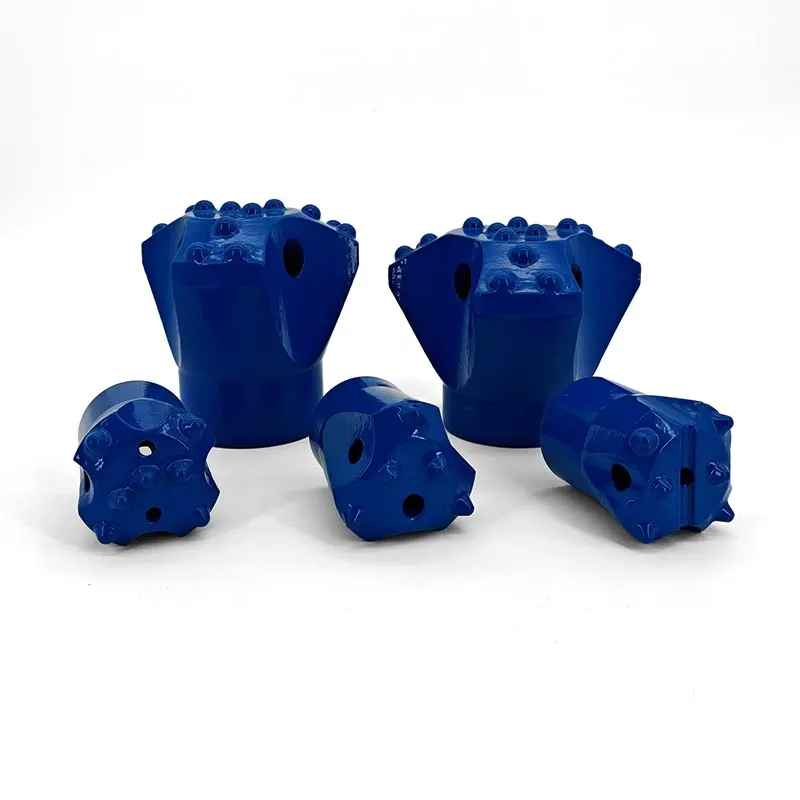
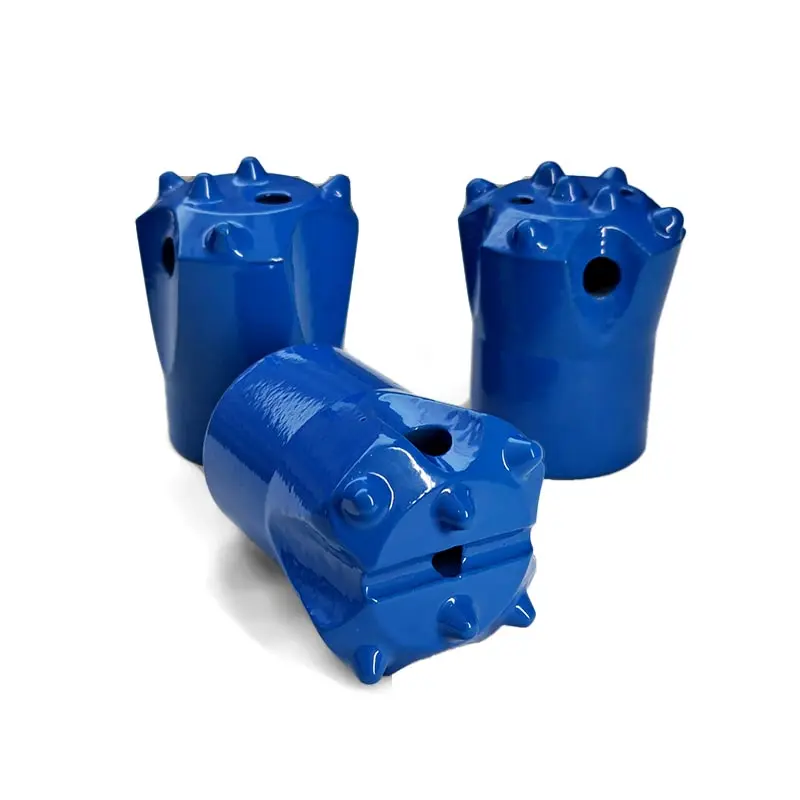
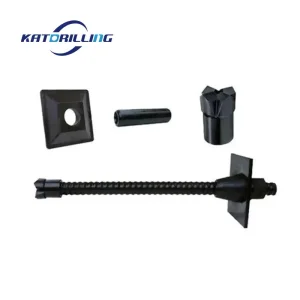
The TC (Tungsten Carbide) Button Bit is a critical high-performance component engineered exclusively for self-drilling anchor systems, designed to address the rigorous demands of geotechnical anchoring projects in complex strata. By integrating premium tungsten carbide inserts with a robust structural design, it delivers seamless synergy of drilling, anchoring, and synchronous grouting—becoming an indispensable tool for stable and efficient construction in hard, abrasive, or fractured formations.
The TC (Tungsten Carbide) Button Bit is a critical high-performance component engineered exclusively for self-drilling anchor systems, designed to address the rigorous demands of geotechnical anchoring projects in complex strata. By integrating premium tungsten carbide inserts with a robust structural design, it delivers seamless synergy of drilling, anchoring, and synchronous grouting—becoming an indispensable tool for stable and efficient construction in hard, abrasive, or fractured formations.
Core Structure & Material Advantages
Tungsten Carbide Button Inserts
Spherical/hemispherical TC buttons (HRC ≥ 90) are precision-brazed to the drill face, arranged in optimized triangular/hexagonal patterns. This configuration ensures concentrated impact force and prolonged service life even in rock up to 200 MPa.
High-Strength Steel Body
Manufactured from quenched-tempered alloy steel (e.g., 42CrMo, 35CrNiMo, HRC 32–38), offering superior torque resistance and impact toughness, compatible with R32, R38, T38, and custom API threads.
Integrated Grouting Channels
Internal hollow channels (diameter 8–20mm) with side outlets ensure unobstructed grout flow during drilling, enabling uniform grout penetration and reinforcing the bond with surrounding rock.
Key Functions & Working Principle
Secure Connection: Threaded to the front end of the self-drilling anchor rod, forming a rigid assembly with the drill rig.
Efficient Drilling: Driven by rotational torque and axial thrust, the TC buttons crush hard rock via impact force while flutes discharge debris.
Synchronous Grouting: Grout is pumped through the hollow core and ejected through the bit channels to fill the borehole gap in real time.
Stable Anchoring: Once cured, the anchor rod, grout, and strata form a high-strength composite system for reliable tensile resistance.
Application Scenarios
Slope stabilization and landslide prevention in fractured hard rock areas.
Foundation pit support for high-rise buildings, bridges, and industrial facilities.
Tunnel lining reinforcement and underground engineering (subway, highway tunnels).
Deep anchoring (depth ≥ 15m) in abrasive or uneven formations.
Port, railway, and road subgrade reinforcement in hard soil/rock regions.
Frequently Asked Questions
Q1: What makes the TC Button Bit suitable for hard rock?The bit features Tungsten Carbide inserts with a hardness of HRC ≥ 90, specifically designed to crush rocks with compressive strength up to 200 MPa, such as granite and basalt.
Q2: Can these bits be used for synchronous grouting?Yes, they are designed with internal hollow channels and side outlets that allow cement or polymer grout to be pumped through during the drilling process.
Q3: What thread types are compatible with the TC Button Bit?The bits are compatible with standard self-drilling anchor rod threads including R32, R38, T38, and custom API thread specifications.
Q4: What material is used for the bit body?The body is made from high-strength quenched-tempered alloy steel, such as 42CrMo or 35CrNiMo, ensuring high torque resistance and impact toughness.
Q5: In which scenarios is this anchoring system most effective?It is ideal for slope stabilization, tunnel reinforcement, foundation pit support, and any geotechnical project requiring anchoring in fractured or abrasive strata.
Q6: How does the bit help in deep anchoring projects?The robust design and efficient debris discharge flutes ensure fast penetration and straight boreholes, even at depths exceeding 15 meters in uneven formations.
 KAT DRILLING