7 Best China Rock Drill Bit Manufacturers for Global Buyers?

Time:2026-10-13 Author:Sienna
0%

Choosing the right rock drill bit supplier can shape drilling speed, tool life, and project costs. This matters on quarry benches, tunnel headings, foundation sites, and mineral exploration rigs. A low purchase price may look attractive, yet premature wear can stop a crew before lunch.

This guide reviews seven leading China Rock Manufacturer Drill Bits suppliers for global buyers. It focuses on manufacturing capability, material selection, quality control, export experience, and technical support. We consider carbide grade, button geometry, thread accuracy, heat treatment, and compatibility with common drilling systems. These details are not merely catalog language. They affect penetration in granite, vibration in limestone, and service life in abrasive formations.

Field conditions remain unpredictable. A bit that performs well in dry granite may struggle in fractured sandstone. No ranking is permanent. Supplier claims also deserve careful checking through samples, inspection records, and customer references. That is where buyers must think critically.

The selected manufacturers are compared through practical purchasing questions. Can they maintain consistent dimensions across batches? Do they explain recommended air pressure and rotation speed? How quickly can they respond when a shipment arrives with uneven buttons? These questions reveal more than polished product photographs.

This article is not a substitute for site testing. It is a structured starting point. The final choice should match your rock formation, drilling method, equipment, and maintenance capacity. A reliable supplier should offer clear specifications, honest limitations, and support after the invoice is paid. That standard may seem demanding. It should be.
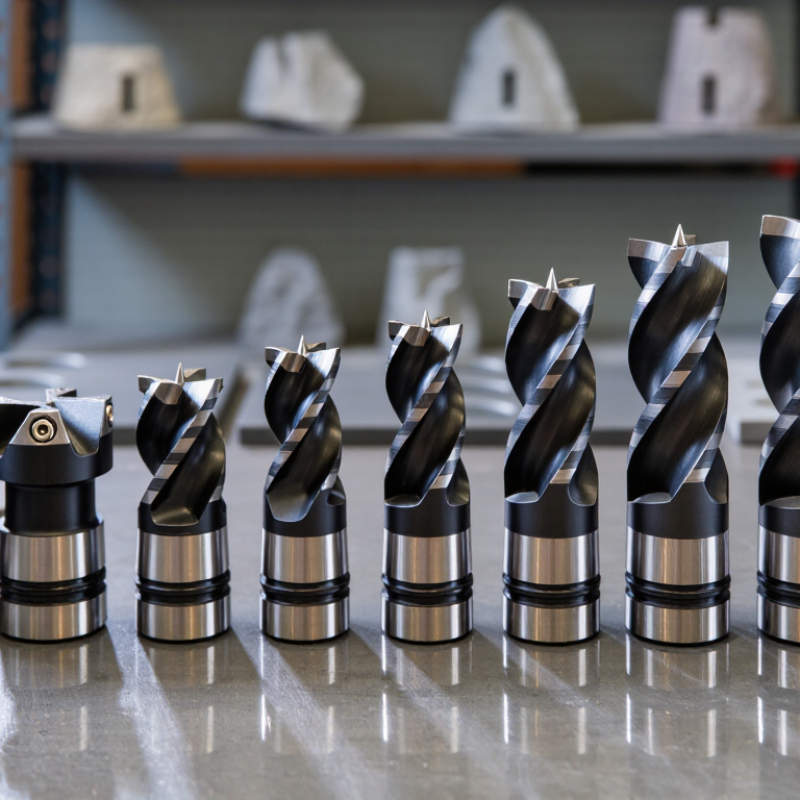
7 Best China Rock Drill Bit Manufacturers for Global Buyers?

What Defines a Reliable China Rock Drill Bit Manufacturer?

7 Best China Rock Drill Bit Manufacturers for Global Buyers?

What Defines a Reliable China Rock Drill Bit Manufacturer?

A reliable China rock drill bit manufacturer starts with measurable quality, not attractive catalog images. Field experience matters. Inspect carbide buttons for even height, clean brazing, and consistent spacing. Check thread accuracy with gauges, not eyesight. Poor alignment can create vibration, premature wear, and unsafe downtime.

The USGS Mineral Commodity Summaries 2024 recorded roughly 22 million metric tons of global copper mine production in 2023. This scale keeps drilling productivity under pressure. Meanwhile, the International Energy Agency’s Global Critical Minerals Outlook 2024 reported strong growth in clean-energy mineral demand. Manufacturers must therefore support harder formations, longer shifts, and tighter delivery schedules.

Ask for material certificates, batch traceability, hardness data, and documented inspection records. ISO 9001 certification helps, but it is not proof of excellent field performance. Request samples from the same production line. Compare penetration speed, button loss, flushing efficiency, and service life in similar rock.

Small details matter.

A serious supplier should explain its carbide grade and heat-treatment process clearly. It should also discuss failures without hiding them. That is where many evaluations become imperfect. Laboratory results may not match wet granite, fractured limestone, or abrasive quartzite. A practical manufacturer welcomes site feedback, accepts reasonable testing, and improves designs through recorded evidence rather than promises.

How to Evaluate Rock Drill Bit Quality and Manufacturing Standards

How to Evaluate Rock Drill Bit Quality and Manufacturing Standards

A dependable rock drill bit begins with controlled materials, not attractive packaging. USGS Mineral Commodity Summaries 2024 estimated 1.9 billion metric tons of crushed stone production in the United States during 2023. That volume shows why small differences in bit life can affect major operating costs. Buyers should request carbide grade certificates, steel heat numbers, and batch-level traceability. Short records matter.

Inspect the bit under magnification. Look for even carbide button spacing, clean brazed joints, and no visible cracks around the shoulders. Check body hardness using ASTM E18 methods, then examine critical areas with ASTM E384 microhardness testing. Dimensional inspection should include shank diameter, button height, gauge diameter, and total runout. A few tenths of a millimeter can change vibration and hole accuracy. The manufacturing system should also show documented calibration, nonconformance handling, and process controls aligned with ISO 9001 principles.

Laboratory claims need field evidence. Compare penetration rate, drilled meters, energy use, and button loss in the same rock formation. Keep pressure, rotation speed, flushing, and operator technique consistent. A bit that drills quickly may still fail early in fractured granite. No single test is enough. My own assessment can become too optimistic when suppliers provide polished samples instead of complete test records. Ask for independent laboratory results, production inspection photos, and repeat tests from different batches. That evidence is less impressive than advertising, but far more useful for global purchasing decisions.

Rock Drill Bit Supplier Evaluation Framework

This reference model uses practical quality dimensions applied when evaluating rock drill bit manufacturers: material traceability, carbide quality, dimensional accuracy, heat-treatment consistency, drilling performance, wear resistance, quality documentation, and production consistency. The percentages represent recommended buyer evaluation weights rather than market-share data.

Seven Leading China Rock Drill Bit Manufacturers for Global Buyers

Seven leading China rock drill bit manufacturers attract global buyers through broad product ranges, flexible production, and competitive tooling costs. Their portfolios often cover top-hammer bits, down-the-hole bits, threaded button bits, and carbide mining tools. A serious comparison should examine alloy grade, button retention, thread accuracy, impact resistance, and documented field performance.

Material sourcing matters. The USGS Mineral Commodity Summaries 2024 reports China produced about 67,000 metric tons of tungsten in 2023, roughly 80% of global mine output. This supports a strong domestic carbide supply chain, but it does not guarantee consistent bit quality. Buyers should request carbide hardness data, batch certificates, dimensional inspection records, and sample results from similar rock formations. Ask for evidence.

The strongest seven manufacturers usually show measurable experience in granite, limestone, coal, or metallic ore applications. Look for ISO 9001 systems, controlled heat treatment, automated brazing, and wear testing under recorded pressure. The Global Mining Equipment Market report by Grand View Research places mining equipment growth at about 5.6% annually through 2030, indicating continued demand for reliable drilling components. Price alone is a weak filter. A cheaper bit may create slower penetration, higher vibration, and more frequent rod changes. No shortlist is perfect. Geological conditions can overturn laboratory assumptions, so a monitored field trial remains essential.

Key Product, Customization, and Export Factors to Compare

Choosing among China’s rock drill bit manufacturers requires more than comparing catalog prices. Product fit comes first. Check thread type, bit diameter, button geometry, carbide grade, and flushing-hole design. These details affect penetration, dust removal, and service life. USGS Mineral Commodity Summaries 2024 reported global iron ore mine production near 2.5 billion metric tons in 2023. That scale shows why consistent drilling performance matters across mines and quarries. However, production volume does not prove manufacturing quality.

Ask for test results from comparable rock conditions. Useful indicators include penetration rate, meters drilled, failure patterns, and cost per meter. Customization should include drawings, sample approval, heat-treatment control, and batch traceability. ISO-based quality procedures can improve confidence, but certificates alone are not enough. I would request inspection records and photographs of finished batches. Some buyers focus too heavily on hardness. That can be a mistake. A very hard button may chip in fractured rock. A balanced design often performs better.

Tips: Send the supplier your rock type, compressive strength, drilling angle, machine model, and target hole size. Request a sample trial before a large order. Compare cost per meter, not unit price. For exports, confirm lead time, packaging, moisture protection, HS classification, inspection documents, and Incoterms. The World Bank’s commodity outlooks show continued price volatility in resource markets, so predictable delivery can protect project margins. Still, forecasts change. Build a small buffer into procurement plans.

7 Best China Rock Drill Bit Manufacturers for Global Buyers? - Key Product, Customization, and Export Factors to Compare

Rank Anonymous Supplier Profile Main Product Strength Typical Bit Diameter Range Common Shank or Thread Options Carbide and Body Configuration Customization Capability Typical Production Lead Time Export and Quality Documents to Request Best Buyer Fit
1 Profile A
High-volume pneumatic drilling specialist
DTH bits Button bits
Suitable for quarrying, construction, water-well, and mining applications.
90–305 mm for common DTH applications; larger sizes available for selected configurations. DHD, QL, M-series, COP-style, and other widely used DTH thread systems; thread selection must match the hammer. Medium-carbon alloy steel bodies with tungsten-carbide buttons; spherical buttons for general rock and ballistic buttons for faster penetration in suitable formations. Button layout, gauge protection, face design, thread specification, flushing-hole arrangement, and body coating. Usually 15–30 working days after drawing and specification approval. Material certificate, dimensional inspection report, hardness report, packing list, commercial invoice, certificate of origin, and pre-shipment inspection if required. Distributors and contractors needing repeat orders and standard DTH dimensions.
2 Profile B
Top-hammer button-bit specialist
Threaded bits Retrac bits
Designed for bench drilling, tunneling, quarrying, and small-to-medium underground equipment.
28–152 mm for common top-hammer drilling sizes. R25, R28, R32, R35, R38, T38, T45, T51, and compatible metric or API-style configurations where applicable. Forged alloy-steel bodies with carbide buttons; center-flush and side-flush designs are commonly available. Face geometry, button diameter, button count, gauge-button arrangement, thread length, flushing design, and wear-protection inserts. Typically 10–25 working days for standard sizes; custom designs may require additional sampling time. Steel and carbide material declarations, batch traceability, inspection records, product drawings, and packaging photographs. Mining contractors and regional distributors using Sandvik-type or similar top-hammer thread standards.
3 Profile C
Water-well and geotechnical drilling supplier
DTH bits Overburden tools
Focused on water wells, geothermal drilling, foundation work, and soil-to-rock transitions.
105–406 mm for standard DTH products; larger hole-opening systems may be engineered separately. DHD, QL, M-series, Mission-style, and other compatible hammer connections subject to drawing confirmation. Alloy-steel bodies with carbide buttons, reinforced gauge rows, and optional wear-resistant hardfacing on high-abrasion areas. Drilling diameter, gauge protection, pilot-hole design, eccentric or concentric reaming configuration, air-flow channel, and wear pads. Approximately 20–35 working days, depending on diameter, body design, and order quantity. Product drawing, inspection certificate, steel grade information, carbide specification, fumigation or heat-treatment packing certificate, and export documents. Well-drilling companies requiring durable tools for abrasive formations and long drilling cycles.
4 Profile D
Large-diameter mining and quarrying supplier
Large DTH bits Heavy-duty button bits
Intended for open-pit mining, aggregate production, blasting holes, and hard-rock bench drilling.
165–610 mm for large-hole applications, subject to machine and hammer compatibility. Large DTH hammer connections, custom adapter interfaces, and selected high-torque thread systems. Heavy alloy-steel bodies, reinforced face sections, high-strength carbide buttons, and optional hardfacing on the gauge and skirt. Oversized body dimensions, button grade, gauge protection, flushing channels, skirt length, anti-sliding features, and wear-resistant overlays. Normally 25–45 working days for large or engineered products. Dimensional inspection, weld or hardfacing procedure information, steel certificate, carbide batch record, load or balance inspection where relevant, and export packing documents. Quarries and mines prioritizing service life, gauge retention, and reduced bit-change frequency.
5 Profile E
OEM and private-label customization supplier
OEM drilling bits Custom tool programs
Produces customer-specific geometries for distributors and equipment dealers.
28–406 mm, depending on the drilling method, body design, and available forging or machining capacity. Top-hammer and DTH thread systems, including R-series, T-series, DHD, QL, M-series, and customer-approved alternatives. Forged or machined alloy-steel bodies with selectable carbide button shapes, grades, brazing methods, and surface treatments. Strong capability for drawings, samples, logo-free packaging, color coding, packaging labels, button layout, flushing design, and controlled revisions. 25–50 working days for new tooling or first-article orders; repeat orders may be shorter. Signed technical drawing, first-article inspection report, material certificate, sample approval record, carton and pallet specification, and quality agreement. Importers and distributors that need differentiated specifications without displaying manufacturer or brand information.
6 Profile F
Cost-focused standard-product supplier
Standard DTH bits Threaded button bits
Offers commonly used sizes for general construction, quarrying, and drilling maintenance.
76–305 mm for frequently ordered standard sizes. Common DTH connections and R-series or T-series top-hammer threads; compatibility should be verified before purchase. Standard alloy-steel bodies and tungsten-carbide buttons with conventional face patterns and flushing holes. Limited to diameter, thread, button configuration, packing method, and small drawing-based modifications. Approximately 7–20 working days for stocked or repeat sizes; non-standard orders take longer. Commercial invoice, packing list, certificate of origin, basic dimensional report, steel certificate, and pre-shipment photos. Buyers with price-sensitive projects, clear specifications, and predictable drilling conditions.
7 Profile G
Specialty carbide and harsh-formation supplier
High-abrasion bits Hard-rock tooling
Developed for quartz-rich formations, abrasive sandstone, granite, and demanding mining conditions.
45–305 mm for top-hammer and DTH applications, with larger sizes subject to engineering review. R32, R38, T45, T51, DHD, QL, M-series, and other compatible systems confirmed by equipment model and drawing. Wear-resistant alloy-steel bodies, reinforced gauge buttons, carbide grades selected for impact or abrasion resistance, and optional hardfacing. Button shape and grade, gauge protection, carbide exposure, face pattern, flushing design, hardfacing zones, and heat-treatment requirements. Usually 20–40 working days, depending on carbide availability and customization level. Carbide grade statement, heat-treatment record, hardness test, dimensional report, product drawing, batch traceability, and export packaging documents. Mining and drilling operations where bit life and gauge stability are more important than the lowest purchase price.
Buyer verification note: The ranges shown are typical industry specifications and indicative procurement benchmarks rather than claims about a named company. Before ordering, verify hammer model, thread standard, hole diameter, rock hardness, abrasiveness, flushing medium, carbide grade, inspection method, Incoterms, minimum order quantity, and delivery schedule through a signed technical drawing and pre-shipment inspection.

How to Select the Right Supplier for Your Drilling Project

Selecting a rock drill bit supplier requires more than comparing catalog prices.
The USGS Mineral Commodity Summaries 2024 estimated global iron ore production at about 2.5 billion tonnes in 2023. Mining demand remains substantial. Bit performance directly affects penetration, downtime, and drilling cost per metre.

Start by matching the bit to rock hardness, abrasiveness, hole diameter, and drilling method. Ask for carbide grade, button geometry, body material, and heat-treatment records. Request dimensional inspection results, batch traceability, and sample test data. ISO 9001 certification can indicate process discipline, but it does not prove field performance. Ask for evidence.

The cheapest quote rarely wins. A practical comparison should include service life, delivery stability, replacement policy, and technical support. The IEA’s Global Critical Minerals Outlook 2024 reported lithium demand rising nearly 30% in 2023, while demand for nickel, cobalt, graphite, and rare earths also increased. This pressure may encourage faster drilling schedules and stricter availability targets. Check whether the supplier can maintain consistent quality during larger orders. Trace every batch.

A controlled field trial is valuable. Record metres drilled, penetration rate, vibration, flushing performance, and wear after each shift. One short trial can mislead. Test across several rock faces when possible. I would also inspect communication speed and problem-solving quality before signing a long-term agreement. Ask for evidence, not confident promises. Geological conditions change, and even a carefully selected bit may need adjustment.

FAQS

What materials should buyers verify before purchasing a rock drill bit?

Request carbide grade records, steel heat numbers, and batch traceability. Short records reveal whether materials were controlled consistently.

Which physical details should be inspected on a drill bit?

Use magnification to check even button spacing, clean brazed joints, and crack-free shoulders. Look closely.

How can manufacturing quality be evaluated beyond the finished product?

Ask for calibration records, process controls, and nonconformance reports. These documents show how problems are identified and corrected.

Which field results are useful when comparing drill bits?

Compare penetration rate, drilled meters, energy use, button loss, and failure patterns. Test bits in the same rock formation.

Can a bit with a high penetration rate still be a poor choice?

Yes. It may drill quickly but fail early in fractured granite. Speed alone is not enough.

What product details should match the drilling equipment?

Confirm thread type, bit diameter, button geometry, carbide grade, and flushing-hole design. These details affect dust removal and service life.

How should customization requests be managed?

Request drawings, sample approval, heat-treatment controls, and batch traceability. Test a sample before placing a large order.

What export and purchasing details deserve attention?

Confirm production lead time, protective packaging, moisture control, inspection documents, customs classification, and delivery terms.

Conclusion

Choosing a reliable supplier is essential when purchasing rock drill bits for mining, construction, quarrying, and other professional drilling projects. This guide explains what defines a dependable China rock drill bit manufacturer, including material selection, precision machining, heat treatment, quality control, production capacity, and compliance with recognized manufacturing standards. It also outlines how buyers can assess bit durability, drilling efficiency, wear resistance, and performance under different rock conditions.

The article compares seven leading types of suppliers without focusing on brand names, highlighting differences in product ranges, customization capabilities, export experience, packaging, lead times, and technical support. It also discusses how China Rock Manufacturer Drill Bits can be evaluated according to drilling method, equipment compatibility, rock hardness, project scale, and total operating cost. By reviewing samples, certifications, production processes, communication quality, and after-sales service, global buyers can select a suitable supplier with greater confidence and establish a dependable long-term partnership.

Sienna

Sienna

Sienna is a skilled marketing professional with a deep expertise in our company’s core products and services. With a passion for innovation and detail, she plays a pivotal role in crafting insightful blog posts that not only highlight the unique features of our offerings but also provide valuable......